A Uniformed Workforce Embroidery Design Fit for the Real World
More Than Just Characters: A Design with Immediate Professional Tone
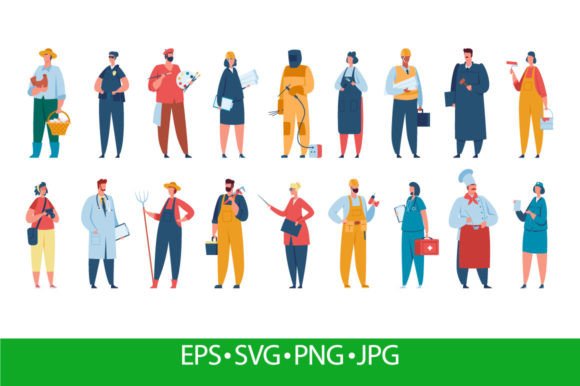
When you first open Professional Workers in Uniform, the impression is clear: this isn't a whimsical or playful illustration set. The mood it creates is one of recognition, respect, and grounded identity. The characters—the engineer, nurse, chef, policewoman, builder, and farmer—are defined by their occupational attire, which gives the entire design a visual personality of reliability and purpose. For an embroidery designer, this tells me immediately that this graphic belongs on projects where the theme is celebration, gratitude, or straightforward representation of a profession. I imagined it on a custom tote bag for a hospital nursing team, where each bag could be personalized with the nurse character, instantly creating a cohesive, appreciated gift.
The Stitching Scenario: Where This Design Thrives and Where It Needs Care
In real-life embroidery, this vector set offers fantastic versatility, but your choice of project matters. The clean, illustrative lines suggest it will stitch out with excellent clarity on items like embroidered patches, aprons for a chef, or pillow covers for a retiree celebrating their farming career. On a dark fabric sweatshirt for a construction company, the bold outlines of the builder could become a standout branded element for small shop merchandise.
However, the level of detail—the specific uniform elements—means you should use it carefully on very small hoop sizes or highly textured fabrics. Tiny lettering or intricate details on a cap's curved surface might lose definition. For a baby clothes item or a delicate tea towel, opting for a single, larger character rather than the full set would maintain stitching clarity. Always test on scrap fabric first, especially if you plan to use it on stretchy material, to see how the fill stitches behave in the denser areas of the uniforms.
Practical Notes for Your Embroidery Project
- Check thread color contrast thoroughly. These uniforms rely on distinct colors—the chef’s whites, the policewoman’s blues—so thread choice against your fabric background is crucial.
- Review stitch density in your software before hooping. Since the product includes vector formats like SVG, this design is likely scalable, but scaling down too much can create overly dense stitch areas.
- Inspecting small details, like the engineer’s tools or the farmer’s hat, is essential to ensure they won’t blend into a satin stitch blob.
- Always confirm the licensing for Professional Workers in Uniform before selling finished items or using it in commercial embroidery projects for clients. The availability of EPS and PNG suggests it’s meant for broad use, but verifying this protects your craft business.
- For digital product sellers creating printable mockups, this set is a strong design asset for career-themed products, but test it in black and white previews to ensure the silhouettes hold up without color.
Turning Stitches into Value: Customer Perception and Product Fit
From a commercial perspective, this design directly boosts product value and customer trust. An embroidered pillow cover with the policewoman character, given as a holiday gift to a family member in law enforcement, carries immediate emotional recognition and professionalism. It feels thoughtful and specific, not generic. For an Etsy seller offering personalized gifts, this set allows for a range of listings—from custom apparel for a graduating engineer to a kitchen towel featuring the chef for a boutique product line.
The handmade presentation gains authority because the design itself is clean and universally understood. It supports brand consistency for a small business decorating uniforms or creating team merchandise. Its giftability is high, and for apparel decorators, it opens doors to client projects for corporate events, retirement celebrations, or career-day activities.
A Real-World Case: The Custom Embroidered Tote Bag
Let’s walk through a scenario. I’m preparing a custom embroidered tote bag for a clinic’s staff appreciation day. Using Professional Workers in Uniform, I select the nurse character. The design’s clear shapes and lack of overly fussy detail mean it will stitch cleanly on the bag’s canvas material with proper stabilizer. I consider making it a focal point, large enough to be impactful but not so large that the bag becomes stiff from dense stitching. The final product feels professional, durable, and perfectly aligned with the recipients’ identities. This is where the design truly shines—creating a finished product that feels both personal and respectfully official.
Final Assessment for Makers and Entrepreneurs
Professional Workers in Uniform is a practical, ready-to-work embroidery design. Its strength is in its straightforward illustrative style and thematic coherence. It fits naturally onto projects that honor, represent, or celebrate professions. For crafters and makers, it simplifies the process of creating career-themed items without needing to design characters from scratch.
Remember to match it with the right product. It’s excellent for patches, aprons, tote bags, and decor items where its details can be appreciated. Be cautious with very small applications or fabrics that challenge clarity. Always do your pre-checks: fabric tests, color contrasts, and license verification. When used thoughtfully, this set becomes a reliable tool in your embroidery workflow, helping you produce professional-looking, meaningful handmade products that customers and clients will genuinely value.